
Crypto Regulations & Rules in the U.S.
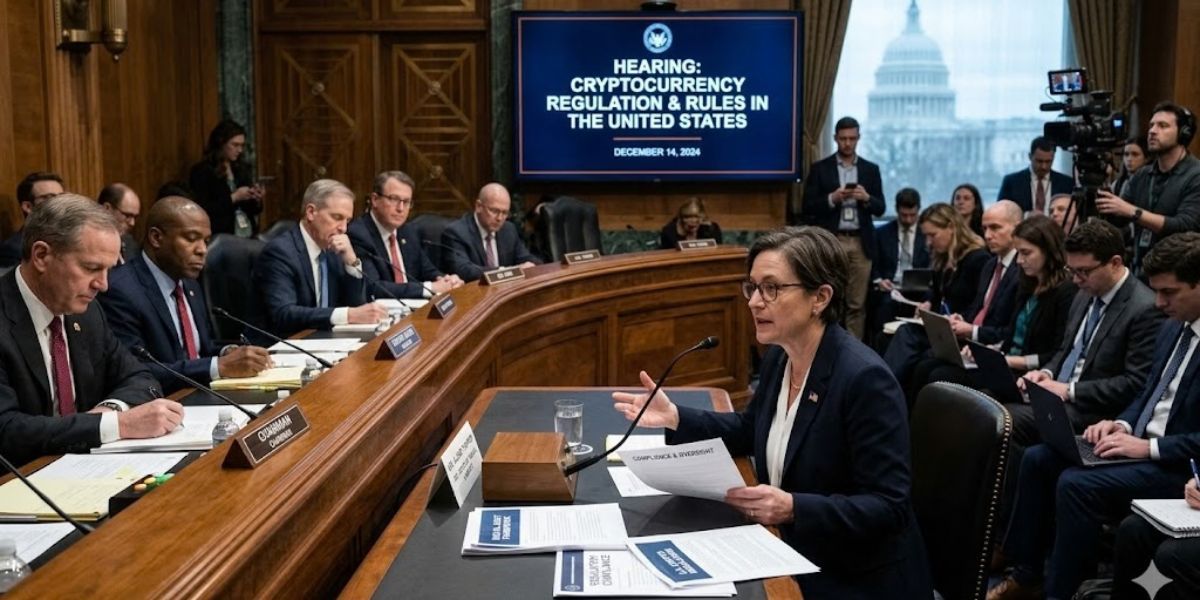
Over the last decade, the market of cryptocurrency has shown rapid growth, thus becoming an important part of the global financial system. The U.S. government has been working to create rules that protect investors and stop any illegal activities in the crypto market. However, contrary to conventional financial systems, crypto regulation in the United States is managed by various agencies and evolving laws instead of a single comprehensive framework.
In this guide, we will go through the major crypto regulations, rules and legal requirements that govern the cryptocurrency market in the United States.
Overview of Cryptocurrency Regulation in the U.S.
Cryptocurrency regulation in the United States is complex because digital assets can fall under different legal categories, such as securities, commodities, or property, depending on their structure and usage. Multiple federal agencies regulate various aspects of the crypto ecosystem.
Currently, there is no single unified federal law specifically dedicated to cryptocurrency, and instead, several existing financial regulations are applied to digital assets.
These laws focus on:
- Investor protection
- Anti-money laundering (AML) compliance
- Tax reporting
- Financial transparency
- Market stability
Regulation continues to evolve as governments attempt to balance innovation with financial security.
Key Regulatory Authorities Governing Crypto
Several government agencies oversee cryptocurrency activities in the United States.
Securities and Exchange Commission (SEC)
The SEC regulates crypto assets that are considered securities. If a digital token is sold to investors with the expectation of profit based on the efforts of others, it may fall under securities law.
The SEC often uses the Howey Test, a legal standard from U.S. securities law, to determine whether a crypto asset qualifies as a security.
Key responsibilities include:
- Regulating initial coin offerings (ICOs)
- Monitoring crypto exchanges that list securities tokens
- Enforcing investor protection laws
Studies suggest that 70–80% of ICOs have been classified as securities offerings by regulators, leading to enforcement actions and compliance requirements.
Commodity Futures Trading Commission (CFTC)
The CFTC regulates cryptocurrencies that are classified as commodities, including major assets like Bitcoin and Ethereum.
The agency oversees:
- Crypto derivatives markets
- Futures and options trading
- Market manipulation and fraud
CFTC-regulated exchanges have handled billions of dollars in crypto derivatives trading annually, highlighting the agency’s role in regulating digital commodity markets.
Financial Crimes Enforcement Network (FinCEN)
FinCEN focuses on anti-money laundering (AML) and counter-terrorism financing regulations.
Under FinCEN rules:
- Crypto exchanges are considered Money Services Businesses (MSBs)
- They must register with FinCEN
- They must implement Know Your Customer (KYC) procedures
These rules help authorities track suspicious financial activities and prevent illegal use of cryptocurrency.
Internal Revenue Service (IRS)
The IRS treats cryptocurrency as property for tax purposes.
This means that:
- Crypto transactions are subject to capital gains tax
- Profits from trading must be reported
- Mining income is considered taxable income
Recent enforcement efforts include increased reporting requirements and audits of high-value crypto accounts.
Major U.S. Crypto Laws and Legislative Efforts
As cryptocurrency adoption grows, lawmakers have introduced several bills to clarify regulatory responsibilities and create legal frameworks.
GENIUS Act (2025)
The Guiding and Establishing National Innovation for U.S. Stablecoins (GENIUS) Act was introduced to regulate stablecoins in the U.S.
Key provisions include:
- Stablecoins must be fully backed by U.S. dollars or low-risk assets
- Issuers must meet strict transparency requirements
- Federal oversight must be established for stablecoin providers
This act represents one of the first major national regulatory frameworks for stablecoins.
Financial Innovation and Technology for the 21st Century Act (FIT21)
Another major legislative initiative is the Financial Innovation and Technology for the 21st Century Act (FIT21).
The goal of this legislation is to:
- Define whether digital assets are securities or commodities
- Clarify the regulatory roles of the SEC and CFTC
- Provide clearer rules for blockchain innovation and consumer protection
Such laws aim to reduce regulatory uncertainty for businesses operating in the crypto sector.
Crypto Exchange Regulations
Crypto exchanges operating in the United States must follow strict regulatory guidelines.
Major compliance requirements include:
Registration Requirements
Exchanges may need to be registered as:
- Money Services Businesses (MSBs) with FinCEN
- Broker-dealers with the SEC
- Derivatives platforms with the CFTC
KYC and AML Compliance
Exchanges must:
- Verify customer identity
- Monitor suspicious transactions
- Report large or unusual transfers
Failure to comply can lead to significant penalties or enforcement actions.
Tax Rules for Cryptocurrency
The U.S. government considers cryptocurrency taxable property.
Important tax rules include:
Capital Gains Tax
Crypto profits are taxed based on holding period:
- Short-term gains (held less than 1 year): taxed as ordinary income
- Long-term gains (held over 1 year): taxed at lower capital gains rates
Taxable Crypto Events
Taxable activities include:
- Selling cryptocurrency for fiat currency
- Trading one cryptocurrency for another
- Using crypto to purchase goods or services
Recent IRS rules also require exchanges and wallets to provide transaction reports to improve tax compliance.
Anti-Money Laundering and Compliance Requirements
Because cryptocurrency transactions can be pseudonymous, regulators have introduced strict compliance rules to prevent illegal activities.
Key AML requirements include:
- Customer identity verification (KYC)
- Monitoring suspicious transactions
- Reporting large transfers to authorities
- Maintaining transaction records
These measures aim to reduce the risk of fraud, money laundering, and terrorist financing.
Enforcement Actions and Regulatory Oversight
U.S. regulators actively enforce crypto regulations through investigations, penalties, and compliance requirements.
Between 2023 and 2024, regulators imposed over $4.3 billion in penalties on crypto firms for violations such as unregistered securities offerings and fraud.
Common violations include:
- Operating unregistered exchanges
- Offering illegal derivatives trading
- Failure to implement AML and KYC measures
- Misleading investors
These enforcement actions show that regulators are increasingly focused on maintaining integrity in the digital asset market.
Challenges in U.S. Crypto Regulation
Despite progress, several challenges remain in regulating cryptocurrency in the United States.
Regulatory Overlap
Multiple agencies regulate different aspects of the crypto industry, which can lead to confusion and compliance challenges for businesses.
Rapid Technological Innovation
Blockchain technology evolves faster than legislation, making it difficult for regulators to keep up.
Global Coordination
Cryptocurrency operates across borders, so effective regulation requires international cooperation between governments.
The Future of Crypto Regulation in the U.S.
The future of cryptocurrency regulation in the United States will likely involve:
- Clearer definitions of digital asset categories
- Stronger consumer protection measures
- Increased tax reporting requirements
- More collaboration between regulatory agencies
New legislation and regulatory reforms aim to provide clarity while supporting innovation in blockchain technology.
As the crypto industry continues to grow, regulatory frameworks will evolve to ensure stability and trust in digital financial systems.
Frequently Asked Questions
Is cryptocurrency legal in the United States?
Yes, cryptocurrency is legal in the United States. However, it is regulated by several federal agencies, and businesses must comply with financial, tax, and anti-money laundering laws.
Which agencies regulate cryptocurrency in the U.S.?
The main regulatory authorities include:
Securities and Exchange Commission (SEC) Commodity Futures Trading Commission (CFTC) Financial Crimes Enforcement Network (FinCEN) Internal Revenue Service (IRS) Each agency oversees different aspects of the crypto ecosystem.
Is cryptocurrency taxed in the United States?
Yes. The IRS treats cryptocurrency as property, meaning profits from trading or selling crypto are subject to capital gains tax.
Are crypto exchanges regulated in the U.S.?
Yes. Crypto exchanges must register with financial regulators and follow strict AML and KYC compliance requirements.
What is the Howey Test in crypto regulation?
The Howey Test is used by regulators to determine whether a cryptocurrency token qualifies as a security. If it does, the token must comply with U.S. securities laws.